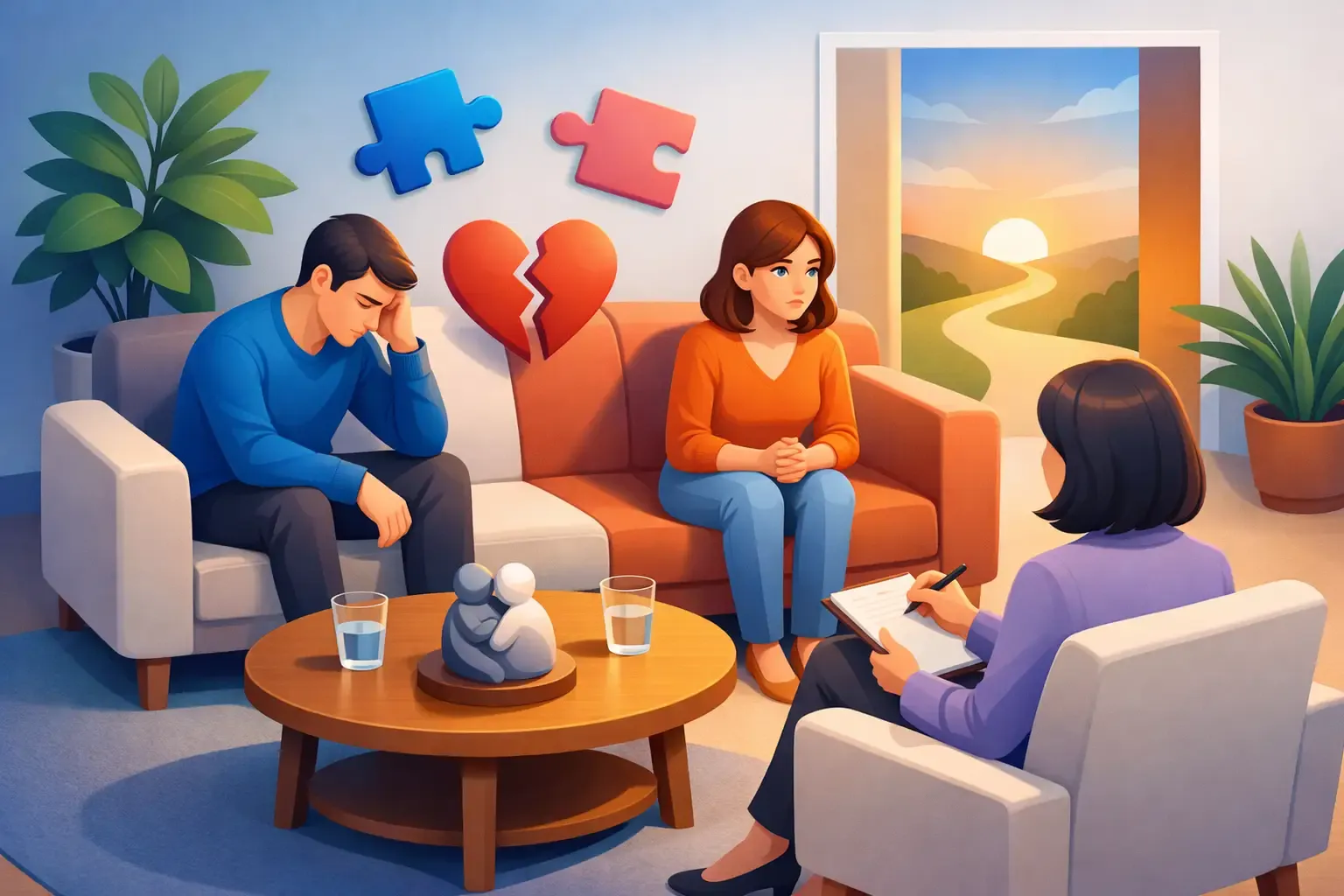

Discovering emotional cheating can make the ground beneath a relationship feel suddenly unreliable. It may have begun with a message, an admission, a friendship that no longer felt like a friendship, or the quiet realization that your partner has been sharing a part of themselves somewhere else. You may be furious, numb, embarrassed, relieved to finally have an explanation, or all of those at once. If you are trying to understand how to heal from emotional cheating, begin here: your reaction is not an overreaction simply because the relationship was not physical.
Emotional cheating does not have one universal definition. Every couple has different agreements about privacy, friendship, flirting, and emotional intimacy. What often makes an outside connection injurious is not only attraction. It is secrecy, emotional investment that displaces the relationship, or a pattern of protecting that connection from a partner's view. Research on infidelity describes betrayal as a deeply disruptive relationship event, often bringing anger, insecurity, shame, grief, and confusion. A 2023 review of the research on infidelity notes how broadly those reactions can affect the people involved.
Healing does not mean deciding today whether to stay. It means creating enough clarity and safety to make a decision that is yours. The steps below are not a formula, and they cannot make an unsafe relationship safe. They can help you slow down the first wave of pain and see what honest repair would actually require.
1. Name what happened without arguing about whether it counts
Couples often get stuck on a single question: “Was this really cheating?” The person who was hurt may feel that something private and essential was taken out of the relationship. The other person may focus on what did not happen: “We never slept together,” “It was only texting,” or “You are making this bigger than it is.” That debate can leave both people more alone.
A more useful question is: what did this connection do to trust between you? Was there secrecy around messages, meetings, feelings, or the importance of the relationship? Did one partner bring tenderness, vulnerability, or sexual energy to someone else while becoming more distant at home? Did either person change their story to avoid an honest conversation? These questions do not require a label before the impact can be taken seriously.
If you are the person who crossed a boundary, clarity is more helpful than self-protection. If you are the person who was hurt, you do not need to prove that your pain is valid. Naming the injury is not the same as deciding the future of the relationship. It is the first step toward seeing the situation as it is.

2. Stabilize before trying to solve the whole relationship
After discovery, many people feel an urgent need for every answer immediately. Others want to shut the conversation down because it feels unbearable. Both responses are understandable. But when a conversation becomes cruel, panicked, or circular, more information does not always create more safety.
Start with the questions that affect the present: Is the outside relationship over? Is there continued contact, secrecy, or a reason to believe more information may emerge later? Is either partner able to speak without fear of intimidation or retaliation? What practical support does each person need in the next few days to sleep, work, care for children, or simply get through the day?
Stabilizing is not the same as pretending everything is fine. It means reducing chaos enough that your decisions are not made only from panic. A pause in a difficult conversation can be healthy when it includes a commitment to return, rather than disappearance or punishment. Try a clear statement such as: “I want to understand this, but I cannot do it well while I am overwhelmed. Let us come back to it tonight with an hour set aside.”
When there is coercion, threats, stalking, physical violence, or fear, the priority is safety, not relationship repair. Couples therapy is not a substitute for a safety plan. The National Domestic Violence Hotline can help people think through confidential support options when a relationship has become unsafe.
3. Ask for honesty that helps you make informed choices
There is a difference between demanding every detail and being given enough truth to understand your reality. The injured partner may need to know when the connection began, what boundaries were crossed, whether contact has ended, whether there were additional secrets, and what the other person intends to do differently. Without those basics, reassurance can feel empty.
The person who crossed the line may feel tempted to reveal information gradually to avoid a bigger reaction. That pattern usually makes recovery harder. Each new discovery can create a second injury because it tells the hurt partner that the story is still moving underneath them. Honest disclosure does not mean sharing details that are graphic, humiliating, or unnecessary. It means refusing to shape the truth around what feels easiest to admit.
For the partner who was hurt, it can help to ask yourself what information will actually support clarity. Some questions are about safety and decision-making. Others may be attempts to quiet an anxiety that no answer can permanently settle. Both needs deserve compassion, but they may need different kinds of support. A therapist can help couples decide how to have these conversations without turning each one into another wound.
4. Make accountability visible and consistent
An apology matters, but it is not the same as accountability. Accountability is the ongoing choice to face the impact of what happened without blaming a partner, minimizing the injury, or demanding quick forgiveness. It is choosing behavior that makes safety more believable over time.
In practical terms, that may mean ending the outside relationship clearly, creating transparent agreements about contact and communication, answering reasonable questions with patience, and bringing concerns into the open before they become a hidden escape route again. Temporary agreements about technology, schedules, or contact can be useful when they are mutual and purposeful. They should support repair, not turn one partner into a permanent investigator and the other into someone being managed.
Understanding why emotional cheating happened can be important, but it is not an excuse. Loneliness, conflict avoidance, stress, attraction, resentment, trauma, and weak boundaries may explain the conditions around a choice. They do not remove responsibility for the choice. Repair becomes more credible when both truths can be held at once: one person owns the harm, and the relationship can still be examined honestly.