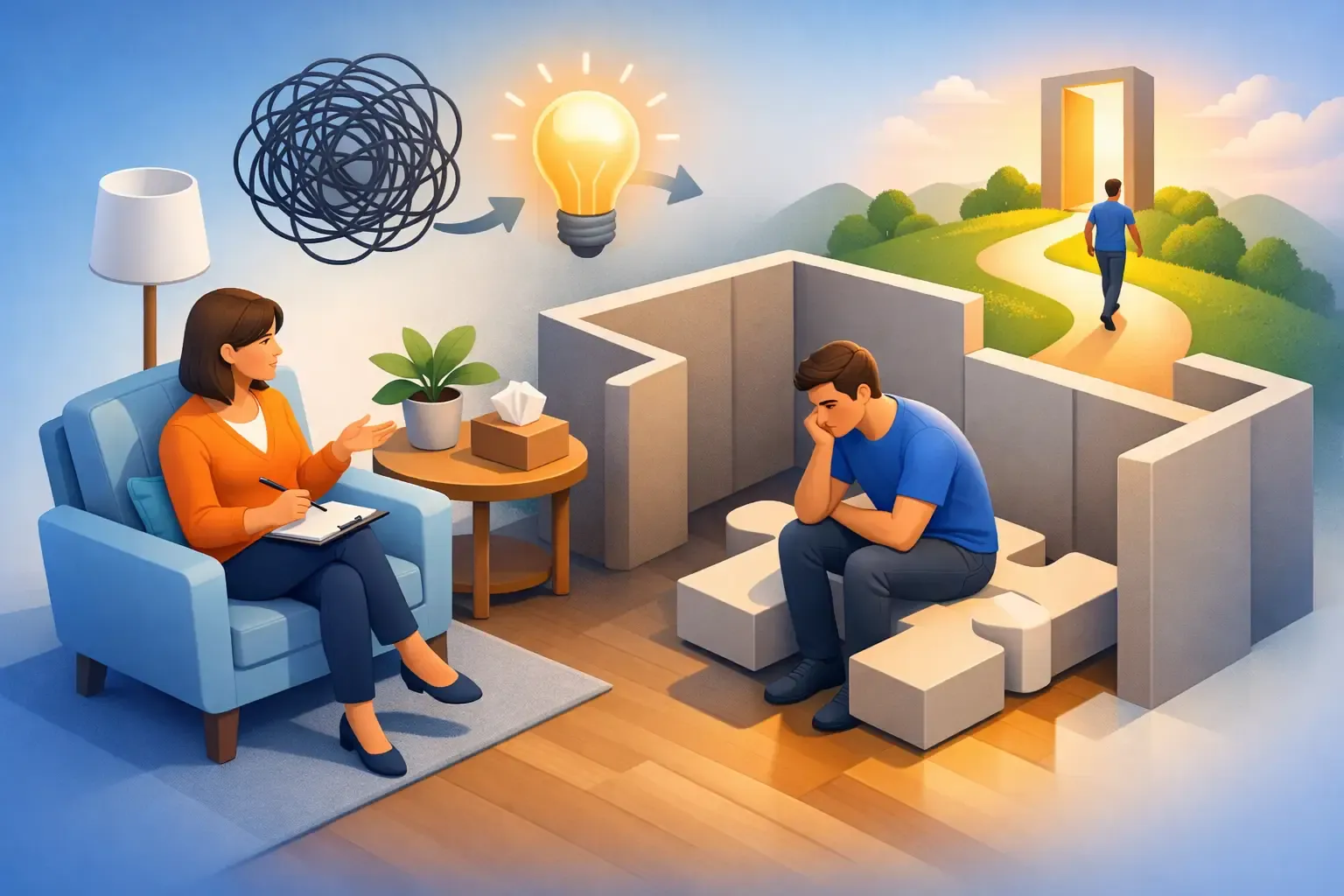

Some people call it stress, but that word can feel far too small. Emotional overwhelm is what happens when your inner world gets so full that even simple decisions feel heavy. You may be functioning on the outside – going to work, answering texts, making dinner – while privately feeling like one more thing could break you. Therapy for emotional overwhelm creates a place to set that weight down, understand what is driving it, and start responding to your life with more steadiness.
For many adults, overwhelm does not arrive all at once. It builds. A painful conversation with your partner sits on top of work pressure. Grief mixes with parenting strain. Old trauma gets stirred up by a new loss, a health scare, or a season of conflict. At some point, your mind and body stop cooperating the way they used to. You cry more easily, snap faster, shut down sooner, or feel strangely numb. You may even wonder, Why can’t I handle this better?
That question usually comes from pain, not truth. Emotional overwhelm is not a character flaw. It is often a sign that too much has been carried alone for too long.
What emotional overwhelm can look like
Overwhelm is deeply personal, but there are patterns therapists see often. Some people feel constantly on edge, with a nervous system that never seems to settle. Others feel emotionally flooded in relationships, where one disagreement turns into panic, rage, or shutdown. For some, overwhelm looks like depression – low motivation, emotional exhaustion, and the sense that everything takes too much effort.
It can also show up physically. Trouble sleeping, headaches, stomach issues, muscle tension, racing thoughts, and difficulty concentrating are common. If you’ve been telling yourself to push through but your body keeps signaling distress, that matters.
There is also a quieter form of overwhelm that gets missed. You may not be crying every day or having visible breakdowns. You may simply feel disconnected from yourself. Things that once felt manageable now feel impossible. Your patience is shorter. Your hope is thinner. You keep moving, but it feels like survival rather than living.
Why therapy for emotional overwhelm works
When you’re overwhelmed, advice from friends often misses the mark. “Take a break.” “Think positive.” “Just set boundaries.” Those ideas are not always wrong, but they can feel almost insulting when your emotions are already overflowing. If you knew how to calm the storm on your own, you probably would have done it by now.
Therapy for emotional overwhelm works because it does more than hand you coping tips. It helps you make sense of what your emotions are doing, where they come from, and what they need from you now. A good therapist is not just listening for symptoms. They are listening for patterns, wounds, pressures, relationship dynamics, and nervous system responses that keep you stuck in survival mode.
That matters because overwhelm usually has layers. Sometimes the main driver is current stress. Sometimes it is unresolved trauma. Sometimes it is a relationship that no longer feels safe, a season of burnout, or a lifetime of learning to ignore your own needs until your system finally protests. The right therapy approach depends on those layers.
This is why surface-level support can leave people discouraged. If your overwhelm is rooted in trauma, insight alone may not be enough. If your distress is relational, individual coping strategies may help but still leave the core pain untouched. If your life is packed with real demands, therapy cannot magically remove them, but it can help you respond without losing yourself in the process.
What happens in therapy for emotional overwhelm
The first step is usually slower and gentler than people expect. Before deep work begins, therapy often focuses on helping you feel safe enough to be honest. That may mean naming what has been happening without minimizing it. It may mean noticing when your body starts to tense or when your mind goes blank. It may mean learning how to stay present when strong emotions rise instead of immediately shutting down or spinning out.
From there, therapy begins to organize what feels chaotic. Together, you and your therapist look at what triggers overwhelm, what happens inside you when it hits, and what you tend to do next. Maybe you over-function and try to control everything. Maybe you withdraw and disappear. Maybe you lash out, then feel ashamed. None of those responses make you bad. They often make sense in light of what you’ve lived through.
As therapy continues, the work becomes both practical and restorative. You may build skills for emotional regulation, improve communication in your relationships, process trauma, grieve losses, or challenge harsh internal beliefs that keep telling you you’re failing. If faith is an important part of your life, some people also want therapy that makes room for that without forcing easy answers.